

September hasn't exactly been a month investors will remember fondly. The Nifty 50 is down nearly 13% this year and is heading for its eighth straight weekly loss. With just one quarter left, the index is staring at its first yearly loss since 2015.

One of the biggest headaches? Oil. Rising crude prices are adding to inflation worries and squeezing company margins, putting more pressure on earnings and investor sentiment. For once, we'll spare you a certain name from Washington.
As Q2FY27 earnings season begins, HDFC Securities expects earnings growth to cool to 13-14%, from 18-19% in the previous quarter. But Unmesh Sharma, Head of Institutional Equities at HDFC Securities, says growth remains strong despite the slowdown.
Sharma is also upbeat on mid- and small-cap stocks, where he sees several emerging investment themes.
The market may be in a bad mood, but some companies, thankfully, are exceptions.
In this week's newsletter, we look at five companies that analysts expect to post strong revenue and earnings growth, despite the broader market headwinds.

The Q2 frontrunners: Analysts pick their top five
As we head into the Q2FY27 results, we shortlist five stocks from the Nifty 500 that are predicted to post strong YoY and QoQ revenue and net profit growth, according to Trendlyne’s Forecaster. These companies have already set the bar high with good results in Q1FY27.
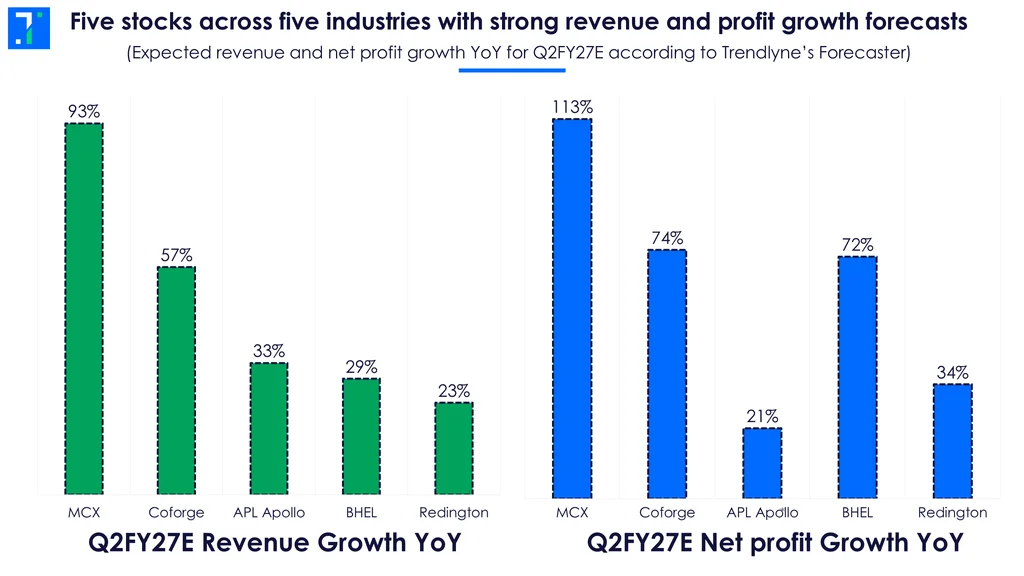
All five stocks in focus, Multi Commodity Exchange (MCX), Coforge, APL Apollo Tubes, Bharat Heavy Electricals (BHEL), and Redington, are from different sectors.
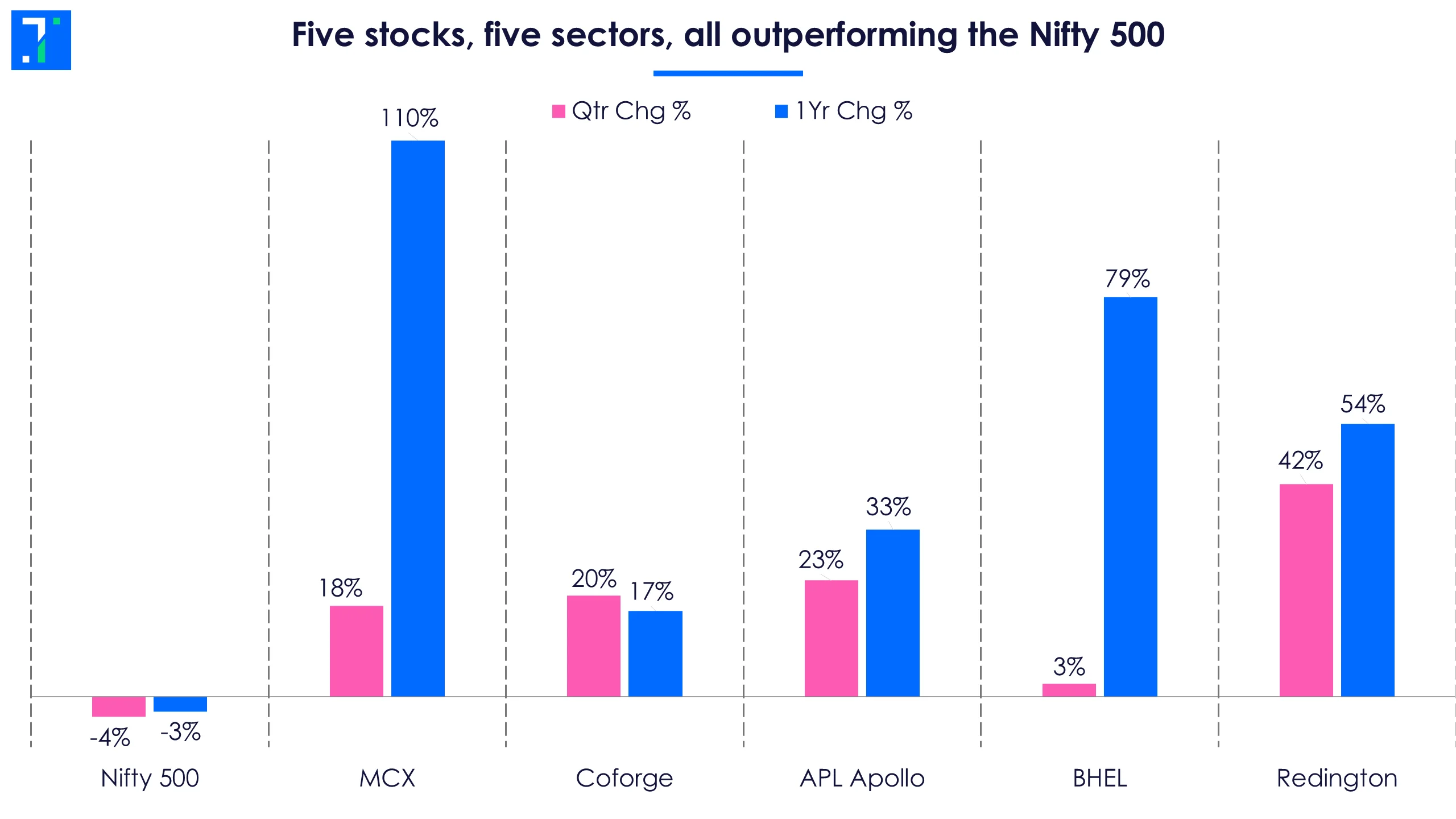
These stocks have outpaced the Nifty 500 over the past year and quarter.
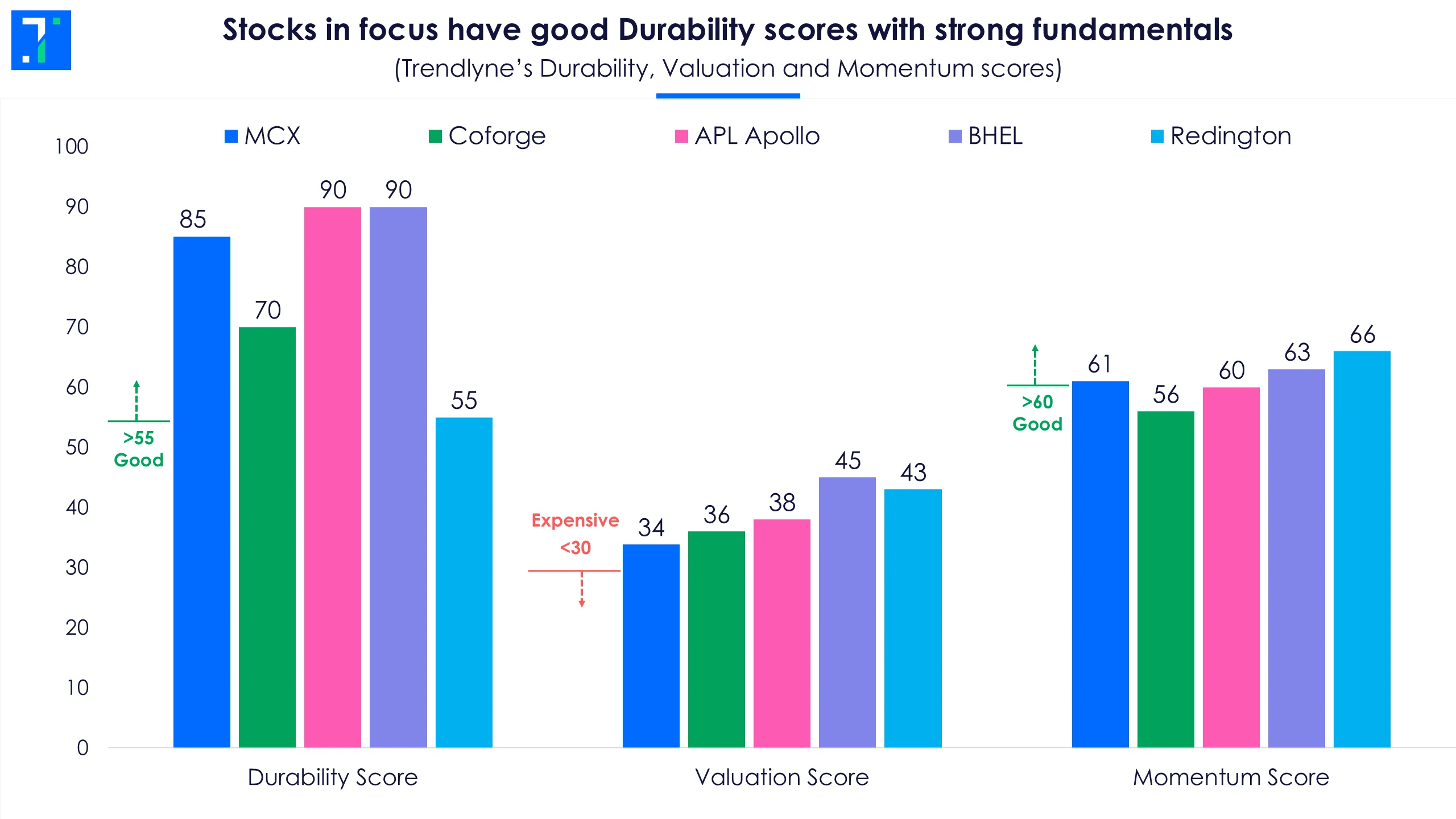
All five stocks have either ‘Good’ or ‘Medium’ scores across Durability, Valuation and Momentum categories.
Iron & steel products, heavy electrical equipment, commodity trading & distribution, IT consulting & software, and capital markets feature in the list.
Steel product makers are expected to benefit from better pricing and a recovery in construction demand, while heavy electrical equipment makers are likely to benefit from strong demand from the power sector.
Technology distributors could see continued demand for premium electronics and technology products, while mid-sized IT companies may benefit from large deal wins and AI-led spending.
MCX turns volatility into a business model
MCX has been on a roll, more than doubling investors' money in the past year, and the momentum continues. Trendlyne's Forecaster expects Q2 revenue to rise 93% and net profit to more than double YoY.
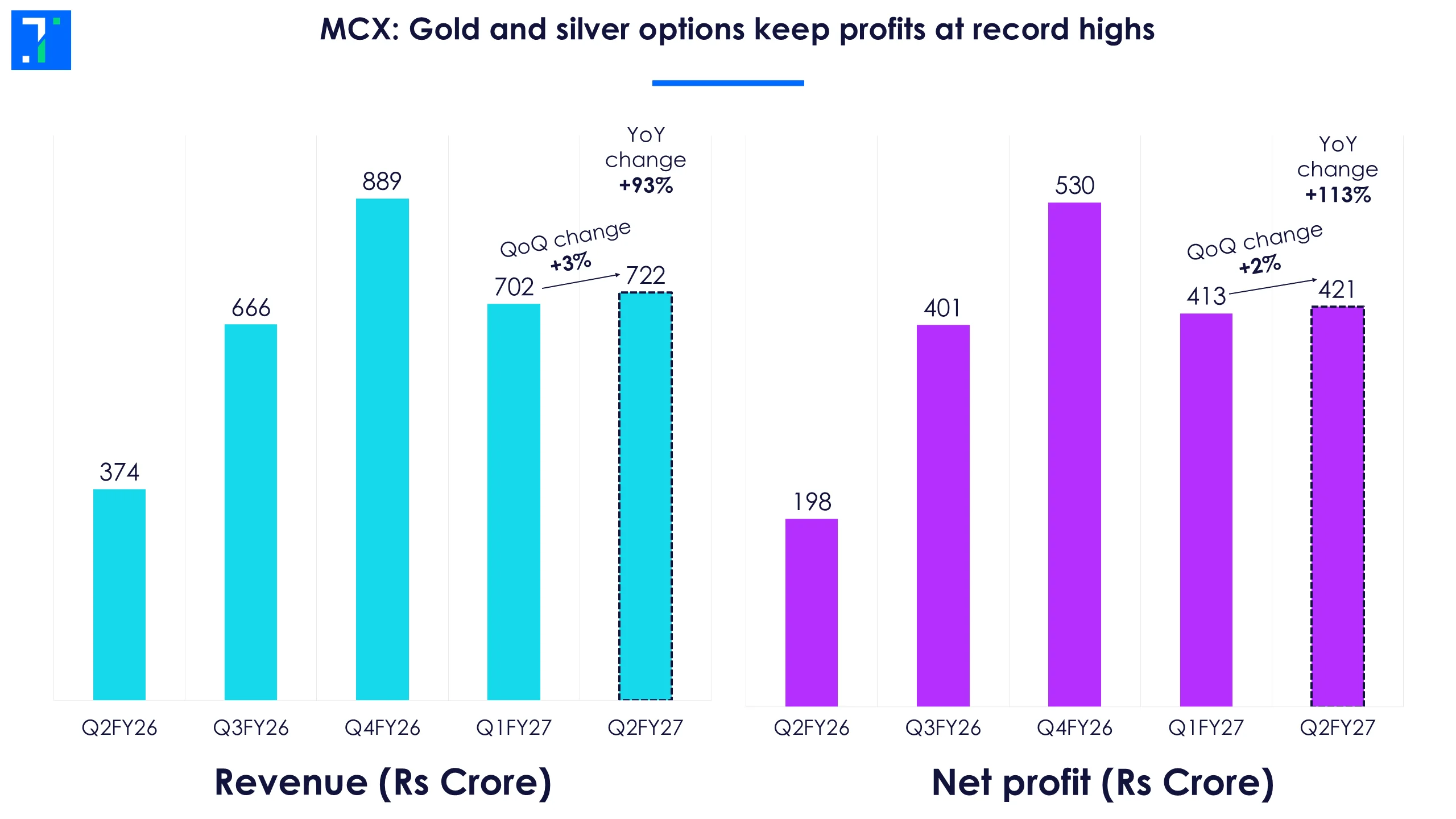
The biggest driver is commodity options, led by gold and silver, followed by crude oil and natural gas.
MCX's client base has nearly doubled in a year, partly as traders moved away from equity derivatives after SEBI tightened trading rules.
Sharp swings in gold and silver prices have also pushed more activity towards commodities. Gold and silver now account for about two-thirds of MCX's daily trading.
MCX has more than 99% of India's exchange-traded bullion, base metals and energy derivatives market. nd because an exchange can handle higher trading volumes without a similar increase in costs, the additional revenue can translate into a significant increase in profit.
Praveena Rai, MD & CEO of MCX, said, "Volatility is not the enemy - unhedged exposure to volatility is."
MCX is also expanding into coal and minerals, planning to invest up to Rs 200 crore in new trading platforms.
Coforge buys its way into the AI big league
It’s been a rough year for Indian IT.
TCS, Infosys and Wipro are down about 30% each, but Coforge has gained 17%. Trendlyne’s Forecaster expects Q2 revenue to rise 57% YoY and net profit to rise 74%.
Part of the growth is coming from Encora, the US-based AI engineering firm that Coforge acquired for $2.35 billion.
Q2 is the first full quarter to include Encora, and management expects its highest-ever number of large deals. After the Q1 results, CEO Sudhir Singh said he expected “very robust growth, starting with Q2 itself.”
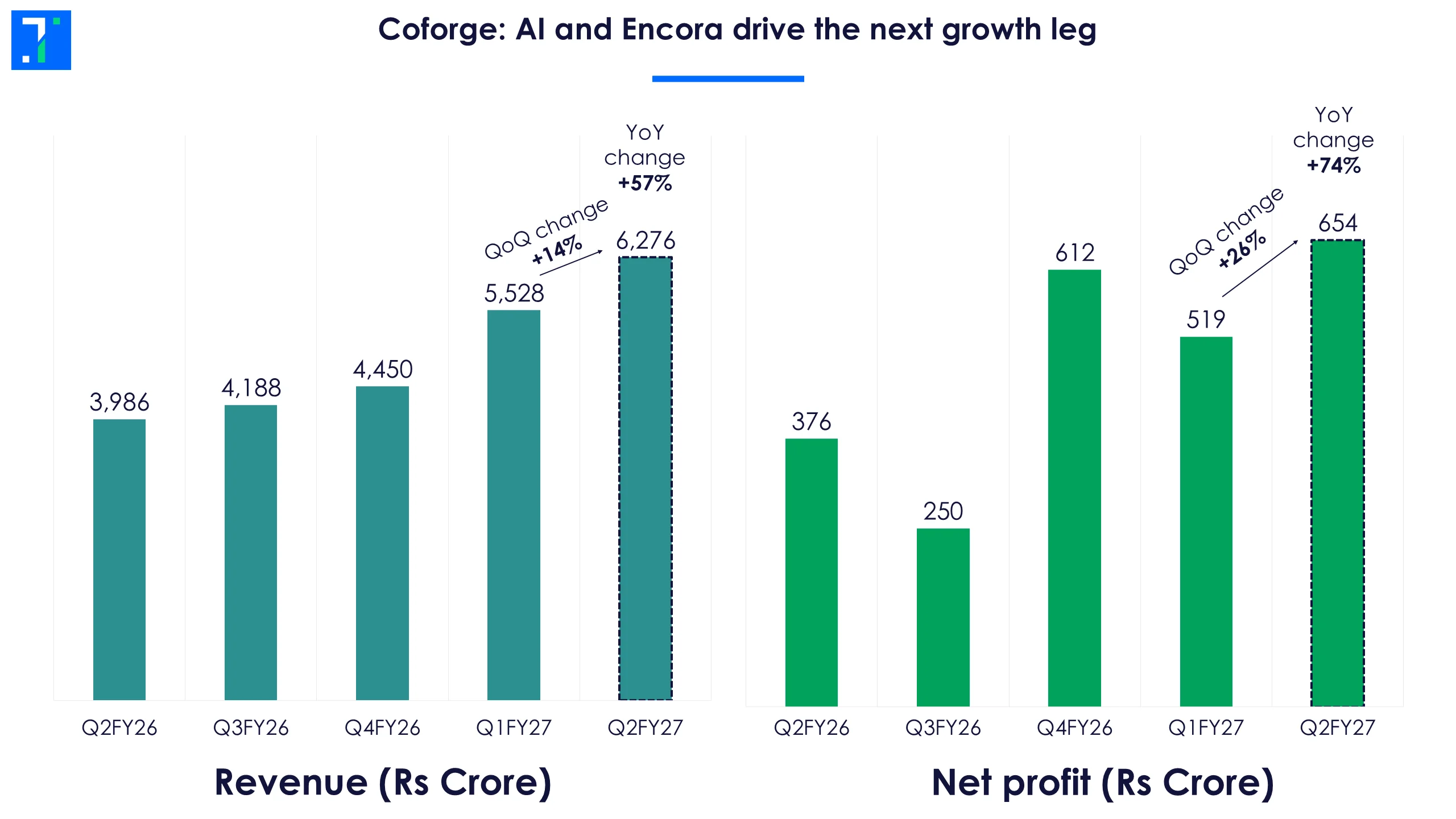
Coforge has also taken a different approach to the AI opportunity. While larger IT firms still get a significant share of their business from legacy software maintenance, Coforge has focused more on helping companies modernise their systems for AI. About 86% of its revenue now comes from AI, data and cloud work. The company is also shifting from billing clients for hours worked to charging for the outcomes it delivers.
A key risk is governance. Advent, Coforge’s largest shareholder, opposed Chairman OP Bhatt’s reappointment. Bhatt later resigned after an internal audit found he had withheld board evaluation findings, sending the stock down nearly 9% intraday on September 9.
APL Apollo: Riding the infrastructure recovery
APL Apollo makes steel tubes used in warehouses, airports, metro projects and solar frames. The stock is up 33% in a year. Trendlyne’s Forecaster expects Q2 revenue to rise 33% YoY and net profit 21%, as construction demand recovers from a relatively weak Q1.
Sanjay Gupta, Chairman of APL Apollo, said, "We expect demand conditions to improve in the coming quarters on the back of an improved government budget allocation for the infrastructure sector."
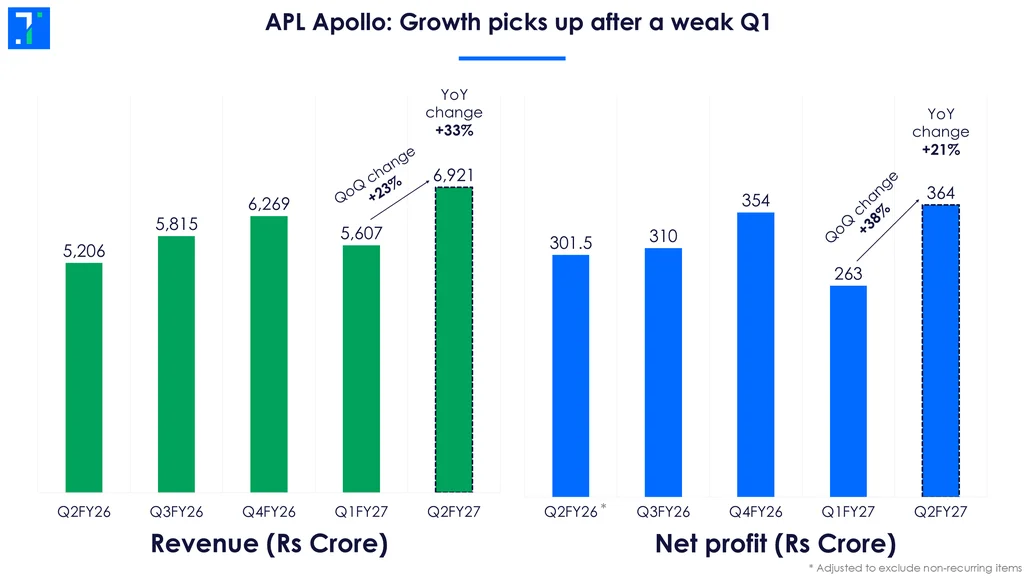
Q1 was a tough quarter for APL Apollo, with higher steel prices and problems at its UAE plant weighing on the business. However, profits held up because the company was able to pass on higher costs without losing customers. APL Apollo controls about 65% of India's high-quality steel tube market.
Demand could get a boost as builders shift towards faster steel structures and solar projects expand. But steel prices remain a concern. When prices rise sharply, dealers often hold back on purchases, as they did in Q1.
BHEL powers up after years of stalling
For years, BHEL won large orders but struggled to execute them. That now seems to be changing. The stock is up 79% in a year, while Trendlyne's Forecaster expects Q2 revenue to grow 29% YoY and net profit 72%
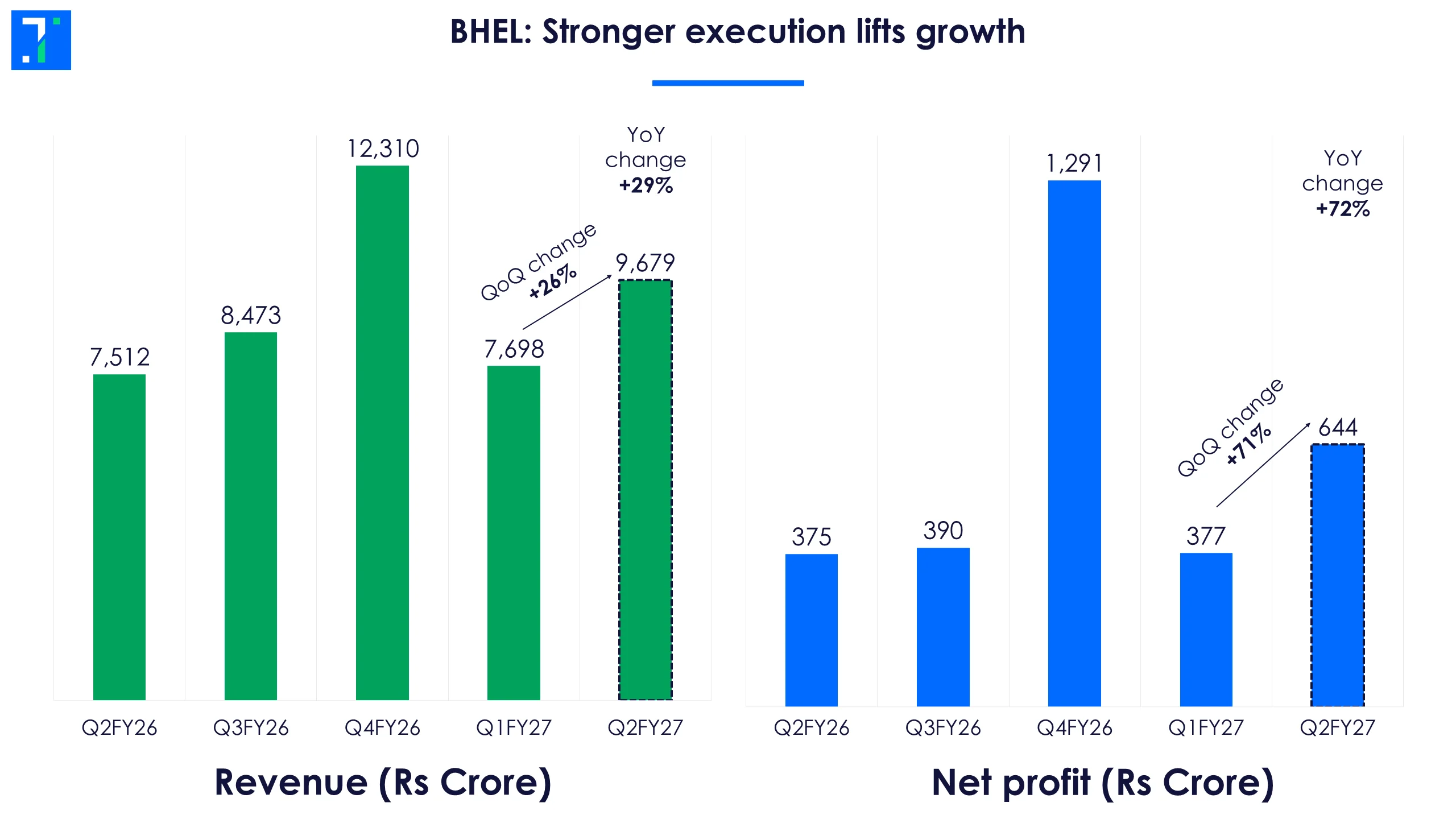
Much of the improvement is coming from faster execution. BHEL is paying suppliers sooner, and the government has allowed it to import key components that were holding up projects. That is helping its factories run at higher capacity and allowing projects to move ahead faster.
In Q1, it earned a profit of Rs 377 crore against a loss of Rs 455 crore a year ago.
BHEL has built over half of India's coal power capacity. Competition is limited in large thermal power tenders. Global players have largely exited coal, while Chinese companies face bidding restrictions in India. At the same time, rising power demand and the need for round-the-clock supply are keeping coal power relevant.
K Sadashiv Murthy, CMD of BHEL, said, "The renewed emphasis on energy security, following recent geopolitical disruptions, has reinforced the role of coal-based generation in national planning."
The key risk is execution. Power projects take years to complete, and rising costs could squeeze BHEL's thin margins.
Redington rides the premium gadget wave
When you buy an iPhone or Lenovo laptop from a neighbourhood store, it probably came through Redington. The distributor buys products in bulk, stores them, delivers them to retailers and lets them pay later.
The stock is up 54% in a year. Trendlyne’s Forecaster expects Q2 revenue to rise 23% YoY and net profit 34%.
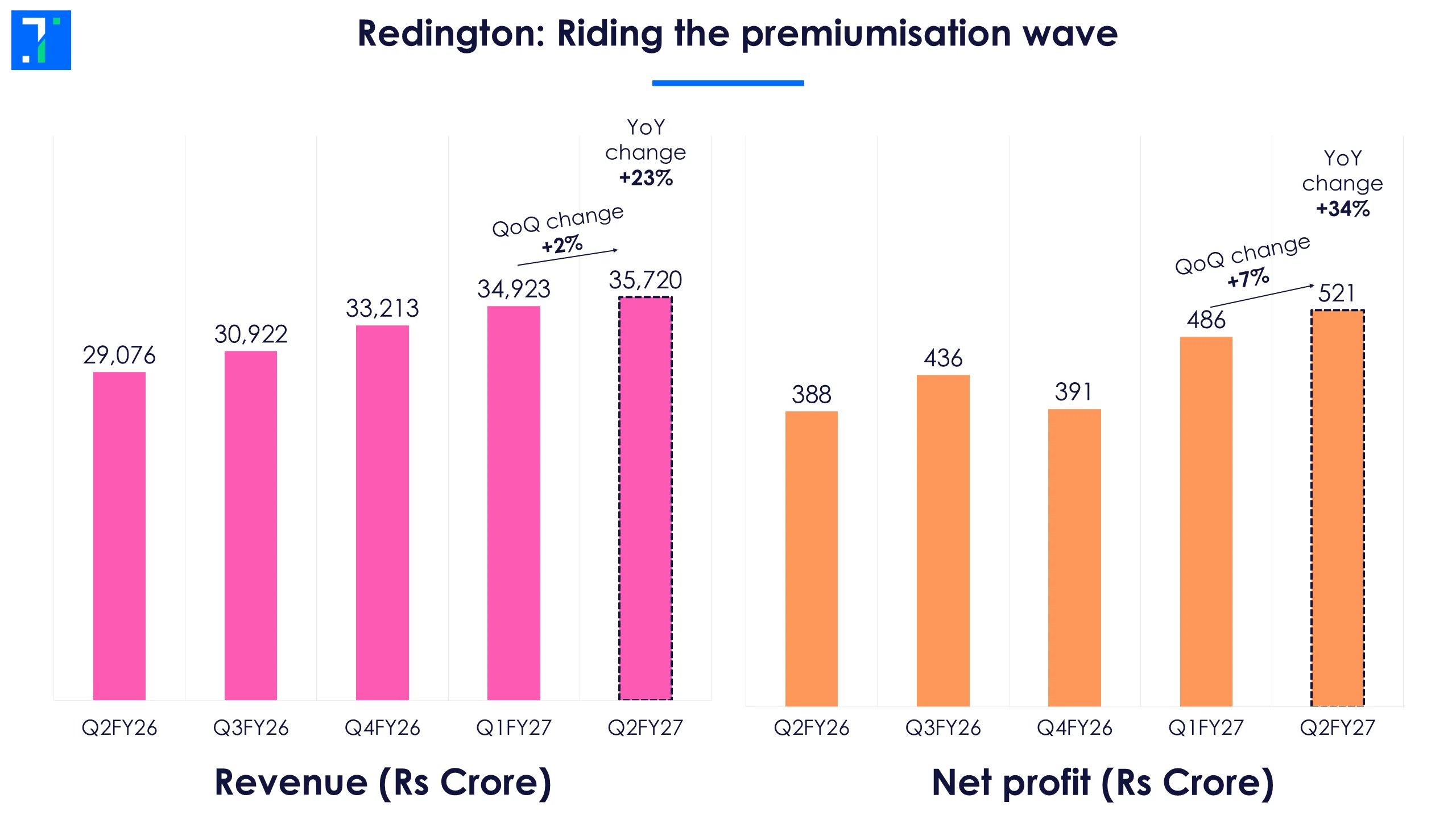
Three trends are helping Redington grow. Indians are spending more on premium smartphones, with iPhones now accounting for nearly a third of its sales. Laptop prices are also rising as a global memory chip shortage pushes up costs.
Companies are also spending more on cloud and cybersecurity, where Redington earns better margins than on hardware.
However, margins remain thin. Net profit is just 1.4% of revenue, and the company is heavily dependent on Apple, which accounts for nearly a third of sales.