

It's a muted market, it's not a muted market. Both of these things are true. The Nifty is down nearly 11% this year and under pressure. But Indian investors put a record Rs 32,297 crore into SIPs in August. While the headline index has struggled, money is moving aggressively into smaller companies and new listings.
Opportunities lie beyond the big guns.
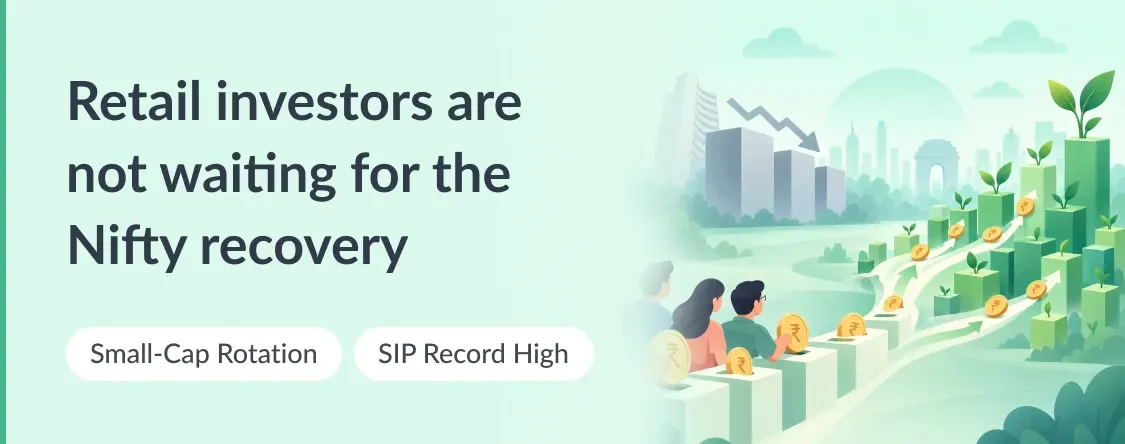
Equity mutual funds received Rs 29,329 crore in August, up 19% from the previous month, as SIP contributions hit an all-time high.
Small-cap funds took in Rs 7,973 crore and mid-cap funds Rs 6,989 crore. Large-cap funds actually saw Rs 1,147 crore leave, their second consecutive month of outflows. Investor investment has moved away from index heavyweights.
Jefferies' Chris Wood notes that Indian midcaps could also get global investor attention if enthusiasm around the US AI trade cools.
The market cue: Investors may benefit from watching market breadth more closely than the Nifty. If mid and smallcaps keep out-performing on weak index days, this correction may be more like a rotation.
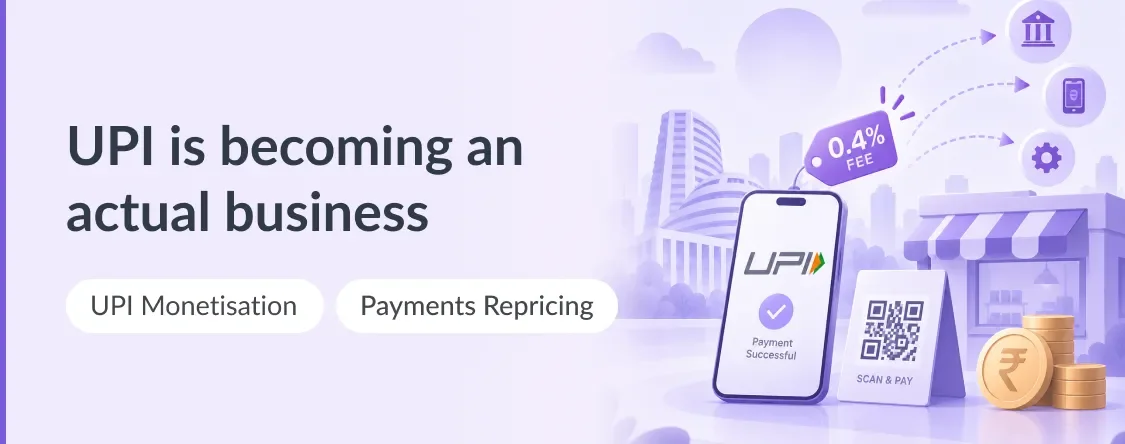
Over the past six years, the UPI payments system became enormous, even as the payments stayed free. That is changing, as from October 15, qualifying merchant transactions above Rs 2,000 will attract a 0.4% fee.
JP Morgan estimates that the UPI fee could create an annual revenue pool of roughly Rs 16,000–17,000 crore, with around 60% potentially going to banks, 25% to app providers and 15% to aggregators. Goldman Sachs and others have already raised estimates for payment companies.
Goldman's high-end scenario suggests Paytm's FY28 EBITDA could be 40–70% higher than its previous estimate. This is very good news for the high volume UPI companies that have long struggled with their margins. However, retailers are already protesting the fee and the suggested rule change could face a court challenge.
The market cue: Payments and transaction-heavy banks have an earnings catalyst that didn't exist a week ago. Watch Paytm, Pine Labs and high UPI volume banks, as analysts figure out who benefits.
Nippon India Mutual Fund says demand indicators are now improving across autos, consumer staples and bank credit, while Q1 results suggested an earnings recovery. The big test from here is whether demand holds into the festive season.
CRISIL notes that passenger vehicle sales rose 25.6% year-on-year, two wheelers 20.6%, while central government capex grew 23.7%. It has raised India's FY27 GDP forecast from 6.6% to 7%.
Barclays sees a boost for India's banks and mid-sized financials, discretionary consumption, autos, telecom, metals and capital goods.
The market cue: The interesting trade here won't be 'buy consumer brands'. Investors should instead keep an eye on earnings upgrades for companies linked to discretionary spending and consumer credit, ahead of results.

NSE's $2.3 billion IPO was fully subscribed on its second day, led by institutional demand. Its anchor book included existing investor LIC, and sovereign wealth funds from Norway and Abu Dhabi. Trading is due to begin on September 24.
Five mainboard IPOs are open this week, and the rush is already pulling liquidity away from the secondary market.
The market cue: Don't immediately interpret weak volumes as bearishness next week. The massive NSE listing in particular, can distort where cash is going.
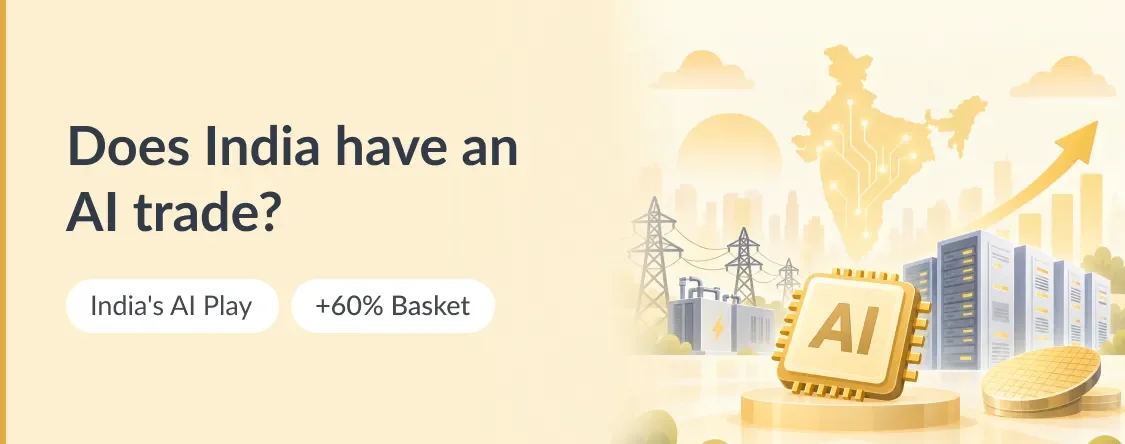
Goldman Sachs has identified 42 Indian AI enablers including ACME Solar, Sterlite Tech, and Polycab India across areas such as power and semiconductors.
The basket is up roughly 60% in 2026, while its earnings estimates have been upgraded around 22%. Nifty 500 estimates, by comparison, have been cut by 2%.
Market cue: It looks like India was hiding its AI theme in the power and infra sectors.
The Tata family quarrel continues to play out in full public view. The Tata Group companies lost about $3.2 billion in market value on Friday after Tata Trusts has publicly challenged N. Chandrasekaran's reappointment and opposed moves towards listing Tata Sons.
Tata Trusts owns roughly two-thirds of Tata Sons. Shapoorji Pallonji, its second-largest shareholder, wants the listing, partly with the hope that selling its shares in the IPO will help pay the debts of the Pallonji Group.
The ongoing stalemate could affect capital allocation and major investments across Tata businesses ranging from Air India to chips and batteries.
Finally, talk on the street is that two names for HDFC Bank CEO have already gone to the RBI. One is rumored to be Kaizad Bharucha, the current Deputy MD. The second name is described only as an external “top private banker.”
Disclaimer: This newsletter is for informational purposes and should not be construed as financial advice. Please consult your financial advisor before making any investment decisions.
